Archives
- 2026-09
- 2026-08
- 2026-07
- 2026-06
- 2026-05
- 2026-04
- 2026-03
- 2026-02
- 2026-01
- 2025-12
- 2025-11
- 2025-10
- 2025-09
- 2025-03
- 2025-02
- 2025-01
- 2024-12
- 2024-11
- 2024-10
- 2024-09
- 2024-08
- 2024-07
- 2024-06
- 2024-05
- 2024-04
- 2024-03
- 2024-02
- 2024-01
- 2023-12
- 2023-11
- 2023-10
- 2023-09
- 2023-08
- 2023-07
- 2023-06
- 2023-05
- 2023-04
- 2023-03
- 2023-02
- 2023-01
- 2022-12
- 2022-11
- 2022-10
- 2022-09
- 2022-08
- 2022-07
- 2022-06
- 2022-05
- 2022-04
- 2022-03
- 2022-02
- 2022-01
-
br Conflict of interest br Acknowledgements We thank Ann Jac
2024-11-11
Conflict of interest Acknowledgements We thank Ann Jackman, Mike Ormerod and members of Julian Downward's and Alan Ashworth's groups for helpful discussions. This work was supported by grant number PEM/GME/D391/40 from the Kidani Trust (S. Kaye) and by Keele University. Introduction Autota
-
br Introduction Human esophageal carcinoma
2024-11-11
Introduction Human esophageal carcinoma is one of the most frequently diagnosed cancers, ranked as the eighth leading causes of cancer-related mortality worldwide. Esophagus squamous cell carcinoma (ESCC) is the most common histological type of esophageal carcinomas, especially with a higher inci
-
In our studies of leucine and
2024-11-11
In our studies of leucine and BCH in pancreatic islets and clonal insulin cell lines, we noticed that leucine was a slightly stronger stimulant of insulin release. Previous studies showed that leucine can be metabolized to CO2[11], [12], [13], [14] and can increase acetoacetate in pancreatic islets
-
Human leukemic blasts from both AML and
2024-11-11
Human leukemic blasts from both AML and ALL patients demonstrated 5-, 12-, and 15-LOX expression [54]; however, using quantitative PCR, 5-LOX was much more prevalent than 15-LOX. When 15-HETE, 12-HETE, and LTB4 were tested for a direct effect on leukemic blasts, none induced apoptosis [54]. In contr
-
The interaction of ATR ATRIP with RPA
2024-11-11

The interaction of ATR-ATRIP with RPA-coated ssDNA is sufficient for ATR-ATRIP recruitment to DNA lesions, but it is not sufficient to fully activate ATR. In response to DNA damage, the heterotrimeric ring-shaped complex 9-1-1 (RAD9-RAD1-HUS1 in humans; Ddc1-Rad17-Mec3 in S. cerevisiae) is loaded at
-
br Funding The present study was funded by The Scientific
2024-11-11
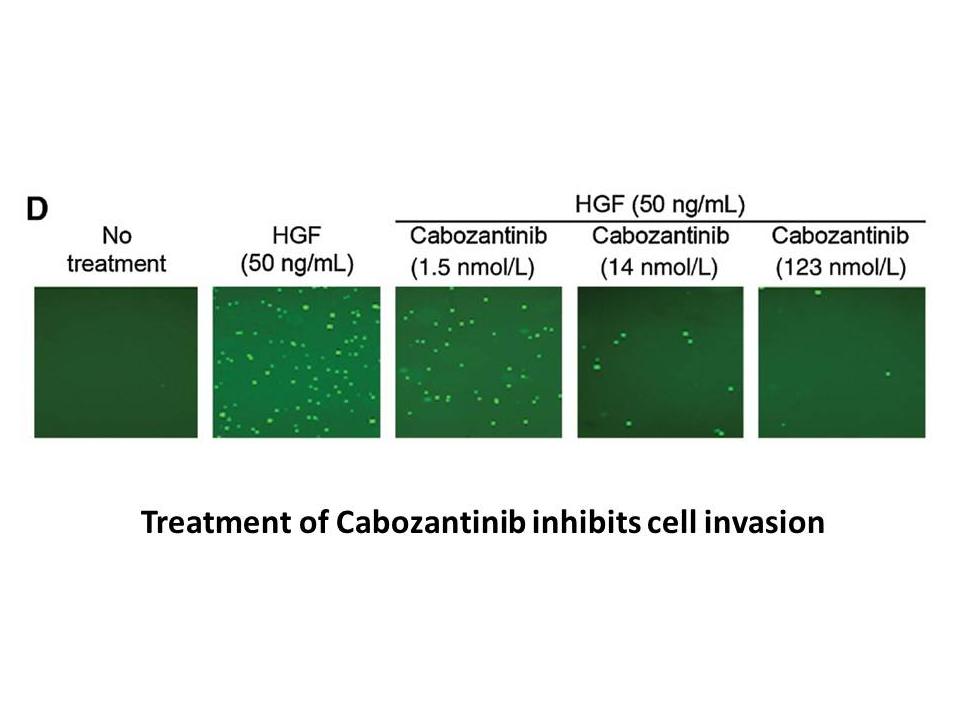
Funding The present study was funded by The Scientific and Technological Research Council of Turkey (TUBITAK) within Research Program 1001, unique project number: 214S349. Introduction The apelin receptor, also called APJ or angiotensin receptor-like 1 was first cloned in 1993 due to its stro
-
Previous research showed that combination of chitosan
2024-11-11
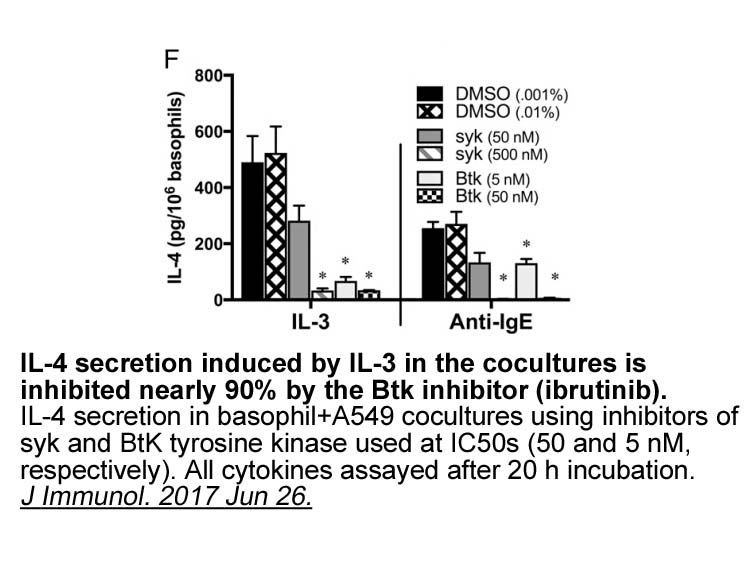
Previous research showed that combination of chitosan and BW 723C86 hydrochloride nanocrystals (CNCs) can produce coating films with superior properties (Naseri, Mathew, Girandon, Fröhlich, & Oksman, 2015). CNCs are crystalline nanometer sized rod-like particles. It has been demonstrated that antimi
-
br Introduction Quenchbody Q body immunoassay
2024-11-11
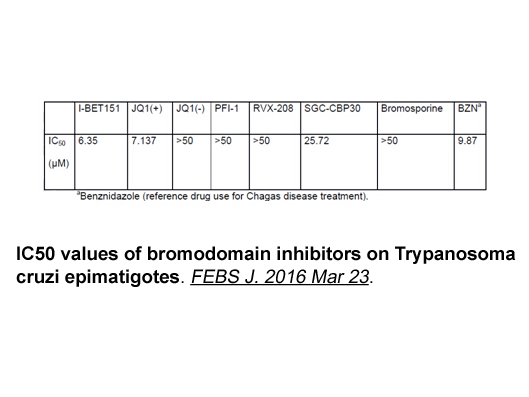
Introduction Quenchbody (Q-body) immunoassay is a novel biosensing technology that uses the quenching of fluorescence by intrinsic tryptophan (Trp) residues in antibody variable regions when dye(s) are conjugated to an antibody or antibody fragments in appropriate position, and de-quenching while
-
Flubendazole There is a growing body of
2024-11-11
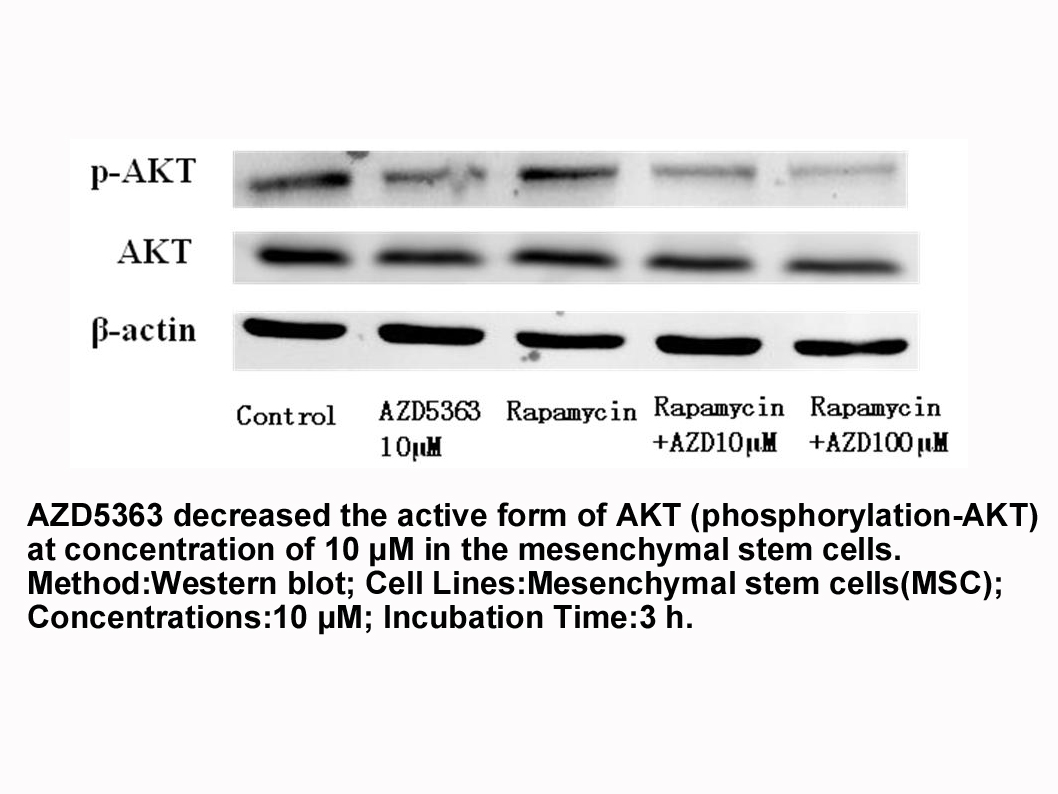
There is a growing body of evidence showing that pentobarbital causes memory disorders [3], [4], [5]. Our results that a single injection of pentobarbital into bilateral hippocampus significantly impaired hippocampus-dependent spatial memory retrieval (Fig. 1) add support to that evidence. Previous
-
br Available treatment modalities for
2024-11-11
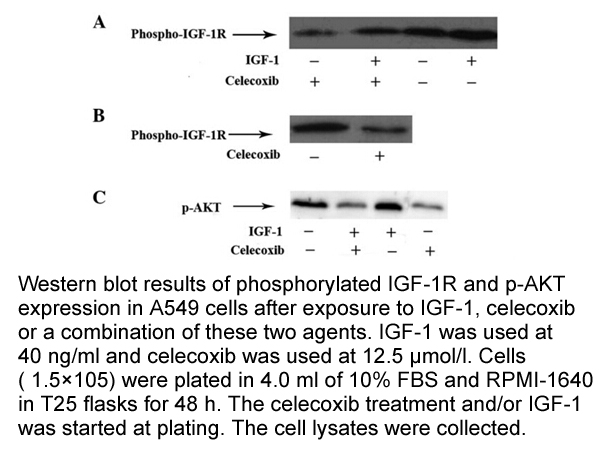
Available treatment modalities for individuals with NAFLD There are several treatment modalities currently used or in clinical trials for individuals with NAFLD. The most widely recommended treatment is a lifestyle modification plan. As little as 5% weight loss has been shown to improve NASH hist
-
The G R mutation is located at the solvent front
2024-11-11
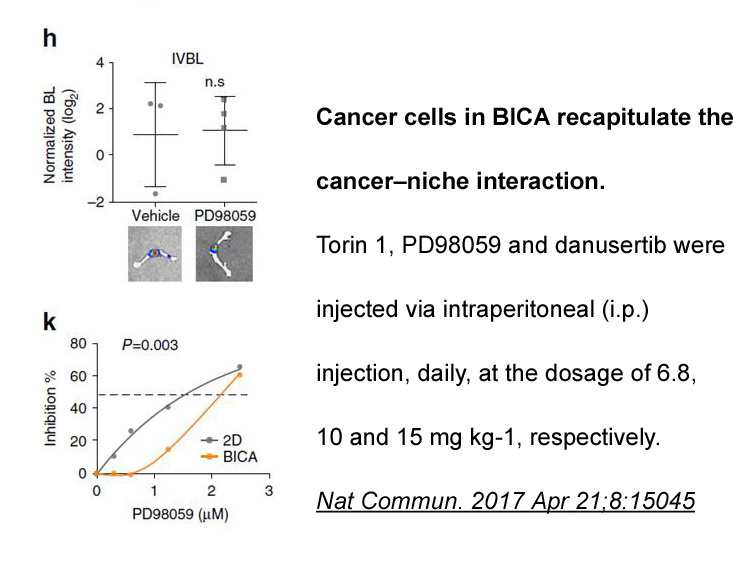
The G1202R mutation is located at the solvent front of the ALK kinase domain adjacent to the inhibitor's binding pocket. Although barely reported in the setting of crizotinib resistance, it has emerged as the most refractory mutation to both the first- and second-generation ALK inhibitors. The large
-
The ORR obtained with crizotinib on our
2024-11-11
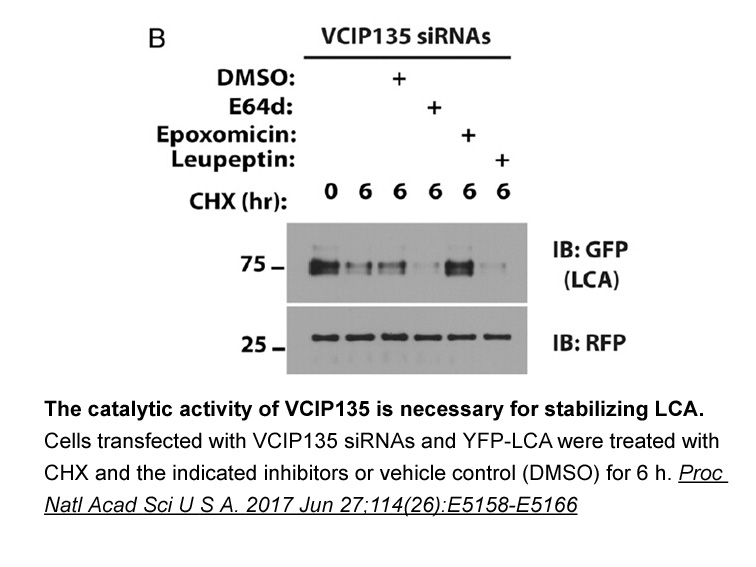
The ORR obtained with crizotinib on our cohort was low compared to other studies, such as the prospective studies of A. Shaw et al. (ORR = 65% in second line), B. Solomon et al. (ORR = 74% in first line) and the more comparable large retrospective study of M. Duruisseaux et al. on the French CLINALK
-
Materials and methods br Results br Discussion The BV
2024-11-09
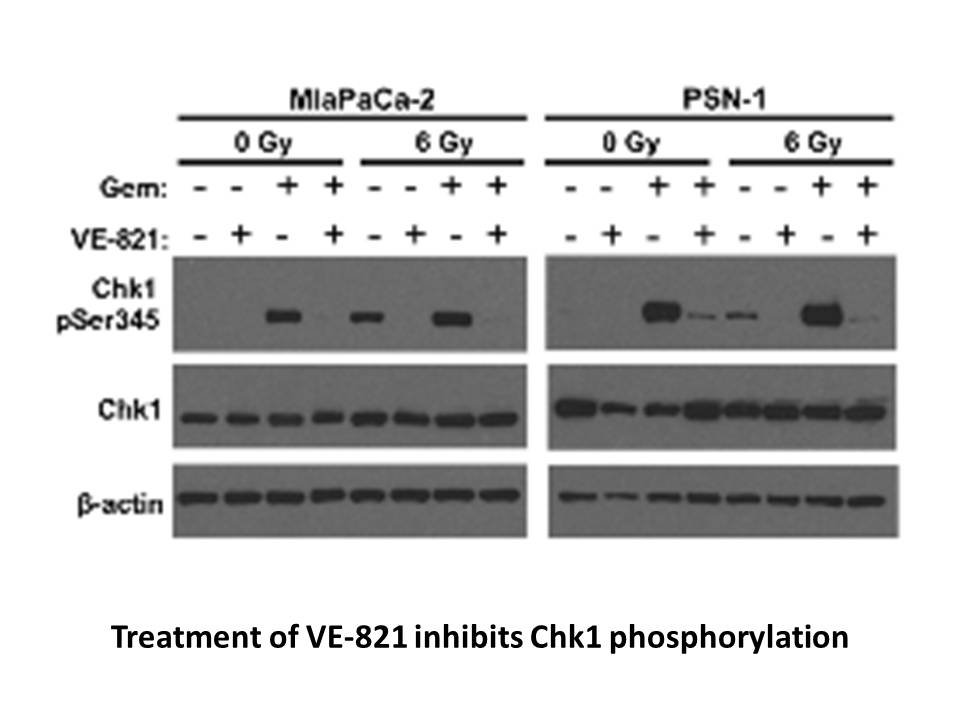
Materials and methods Results Discussion The BV-tag-based electrochemiluminescence immunoassay is an extremely sensitive assay. It has been employed for detecting analytes present in only picogram quantities (e.g., bacterial toxins [26], atp citrate lyase [19]), measuring the activity of ba
-
The purpose of the present study is to
2024-11-09
The purpose of the present study is (1) to characterize AChE from the monogonont B. koreanus and to analyze the modulation of the AChE activity and its transcription level after exposure to six pharmaceuticals, (2) to evaluate the usefulness of AChE as a molecular biomarker upon pharmaceutical expos
-
Further evidence for ACh GABA cotransmission
2024-11-09
Further evidence for ACh/GABA cotransmission had also been observed in the cortex. Extensive axonal arborization from cholinergic BF neurons exists throughout the cortical layers, allowing direct observation of cholinergic synaptic terminals. One study in the visual cortex of cat examined immunolabe
7405 records 88/494 page Previous Next First page 上5页 8687888990 下5页 Last page